


Aligners
Dental Advice
“It’s only one tooth… Do I really need to replace it?”
This is a question many people ask after losing a tooth—especially if the gap isn’t visible when they smile. At first, it may not seem like a serious issue. You can still eat, speak, and go about your daily life without much trouble. Because of this, many people delay treatment or simply ignore the problem.
But what most people don’t realize is that the real effects of a missing tooth usually appear later, not immediately. Over time, the empty space in your mouth can slowly affect surrounding teeth, the jawbone, and even your facial appearance. What begins as a small gap can gradually lead to several oral health complications if it is not treated in time.
Understanding what happens after tooth loss can help you make informed decisions and protect your long-term oral health.

Every tooth in your mouth plays a role in maintaining balance. When one tooth is missing, this balance is disturbed, and several changes can begin to occur.
Shifting of Nearby TeethThe space left by a missing tooth allows adjacent teeth to slowly move into the gap. Over time, this shifting can cause misalignment, crowding, and bite problems. Misaligned teeth are also harder to clean, which increases the risk of cavities and gum disease.
Jawbone LossYour tooth roots stimulate the jawbone whenever you chew. When a tooth is lost, that stimulation stops. As a result, the bone in that area can begin to shrink gradually. This process, known as bone loss, can weaken the jaw over time and make future treatments more complicated.
Higher Risk of Gum ProblemsOpen spaces created by missing teeth can trap food particles and bacteria more easily. This can lead to plaque buildup, gum irritation, and eventually periodontal disease if proper care is not taken.
Changes in AppearanceTeeth provide important support for the facial muscles and overall structure of the face.
When a tooth is missing for a long time, bone loss in the jaw can cause the cheeks to appear slightly hollow. This may give the face a more sunken or aged appearance over time. If the missing tooth is in a visible area, it may also affect the appearance of your smile and reduce confidence.
Difficulty in Eating and SpeakingTeeth work together to help you chew food efficiently and pronounce words clearly.
A missing tooth can make it harder to chew certain foods comfortably. Some people begin avoiding harder foods, which may affect their nutrition. Missing teeth—especially in the front—can also affect the way certain sounds are pronounced, slightly altering speech clarity.
Why Replacing a Missing Tooth MattersReplacing a missing tooth helps restore balance in the mouth and prevents many long-term complications. Early treatment can help:
- Maintain proper bite alignment
- Preserve jawbone strength
- Improve chewing efficiency
- Support clear speech
- Prevent surrounding teeth from shifting
Modern dentistry offers several solutions to replace missing teeth, including dental implants, dental bridges, and removable dentures. These treatments are designed to restore both function and appearance.
If you have lost a tooth, consulting a dental professional early can help you choose the most suitable option and protect your long-term oral health.

Aligners
Dental Advice
“It’s only one tooth… Do I really need to replace it?”
This is a question many people ask after losing a tooth—especially if the gap isn’t visible when they smile. At first, it may not seem like a serious issue. You can still eat, speak, and go about your daily life without much trouble. Because of this, many people delay treatment or simply ignore the problem.
But what most people don’t realize is that the real effects of a missing tooth usually appear later, not immediately. Over time, the empty space in your mouth can slowly affect surrounding teeth, the jawbone, and even your facial appearance. What begins as a small gap can gradually lead to several oral health complications if it is not treated in time.
Understanding what happens after tooth loss can help you make informed decisions and protect your long-term oral health.
Every tooth in your mouth plays a role in maintaining balance. When one tooth is missing, this balance is disturbed, and several changes can begin to occur.
Shifting of Nearby TeethThe space left by a missing tooth allows adjacent teeth to slowly move into the gap. Over time, this shifting can cause misalignment, crowding, and bite problems. Misaligned teeth are also harder to clean, which increases the risk of cavities and gum disease.
Jawbone LossYour tooth roots stimulate the jawbone whenever you chew. When a tooth is lost, that stimulation stops. As a result, the bone in that area can begin to shrink gradually. This process, known as bone loss, can weaken the jaw over time and make future treatments more complicated.
Higher Risk of Gum ProblemsOpen spaces created by missing teeth can trap food particles and bacteria more easily. This can lead to plaque buildup, gum irritation, and eventually periodontal disease if proper care is not taken.
Changes in AppearanceTeeth provide important support for the facial muscles and overall structure of the face.
When a tooth is missing for a long time, bone loss in the jaw can cause the cheeks to appear slightly hollow. This may give the face a more sunken or aged appearance over time. If the missing tooth is in a visible area, it may also affect the appearance of your smile and reduce confidence.
Difficulty in Eating and SpeakingTeeth work together to help you chew food efficiently and pronounce words clearly.
A missing tooth can make it harder to chew certain foods comfortably. Some people begin avoiding harder foods, which may affect their nutrition. Missing teeth—especially in the front—can also affect the way certain sounds are pronounced, slightly altering speech clarity.
Why Replacing a Missing Tooth MattersReplacing a missing tooth helps restore balance in the mouth and prevents many long-term complications. Early treatment can help:
- Maintain proper bite alignment
- Preserve jawbone strength
- Improve chewing efficiency
- Support clear speech
- Prevent surrounding teeth from shifting
Modern dentistry offers several solutions to replace missing teeth, including dental implants, dental bridges, and removable dentures. These treatments are designed to restore both function and appearance.
If you have lost a tooth, consulting a dental professional early can help you choose the most suitable option and protect your long-term oral health.

📝 Latest Comments
No comments yet. Be the first to comment!
Dental Advice
“It’s only one tooth… Do I really need to replace it?”
This is a question many people ask after losing a tooth—especially if the gap isn’t visible when they smile. At first, it may not seem like a serious issue. You can still eat, speak, and go about your daily life without much trouble. Because of this, many people delay treatment or simply ignore the problem.
But what most people don’t realize is that the real effects of a missing tooth usually appear later, not immediately. Over time, the empty space in your mouth can slowly affect surrounding teeth, the jawbone, and even your facial appearance. What begins as a small gap can gradually lead to several oral health complications if it is not treated in time.
Understanding what happens after tooth loss can help you make informed decisions and protect your long-term oral health.
Every tooth in your mouth plays a role in maintaining balance. When one tooth is missing, this balance is disturbed, and several changes can begin to occur.
Shifting of Nearby TeethThe space left by a missing tooth allows adjacent teeth to slowly move into the gap. Over time, this shifting can cause misalignment, crowding, and bite problems. Misaligned teeth are also harder to clean, which increases the risk of cavities and gum disease.
Jawbone LossYour tooth roots stimulate the jawbone whenever you chew. When a tooth is lost, that stimulation stops. As a result, the bone in that area can begin to shrink gradually. This process, known as bone loss, can weaken the jaw over time and make future treatments more complicated.
Higher Risk of Gum ProblemsOpen spaces created by missing teeth can trap food particles and bacteria more easily. This can lead to plaque buildup, gum irritation, and eventually periodontal disease if proper care is not taken.
Changes in AppearanceTeeth provide important support for the facial muscles and overall structure of the face.
When a tooth is missing for a long time, bone loss in the jaw can cause the cheeks to appear slightly hollow. This may give the face a more sunken or aged appearance over time. If the missing tooth is in a visible area, it may also affect the appearance of your smile and reduce confidence.
Difficulty in Eating and SpeakingTeeth work together to help you chew food efficiently and pronounce words clearly.
A missing tooth can make it harder to chew certain foods comfortably. Some people begin avoiding harder foods, which may affect their nutrition. Missing teeth—especially in the front—can also affect the way certain sounds are pronounced, slightly altering speech clarity.
Why Replacing a Missing Tooth MattersReplacing a missing tooth helps restore balance in the mouth and prevents many long-term complications. Early treatment can help:
- Maintain proper bite alignment
- Preserve jawbone strength
- Improve chewing efficiency
- Support clear speech
- Prevent surrounding teeth from shifting
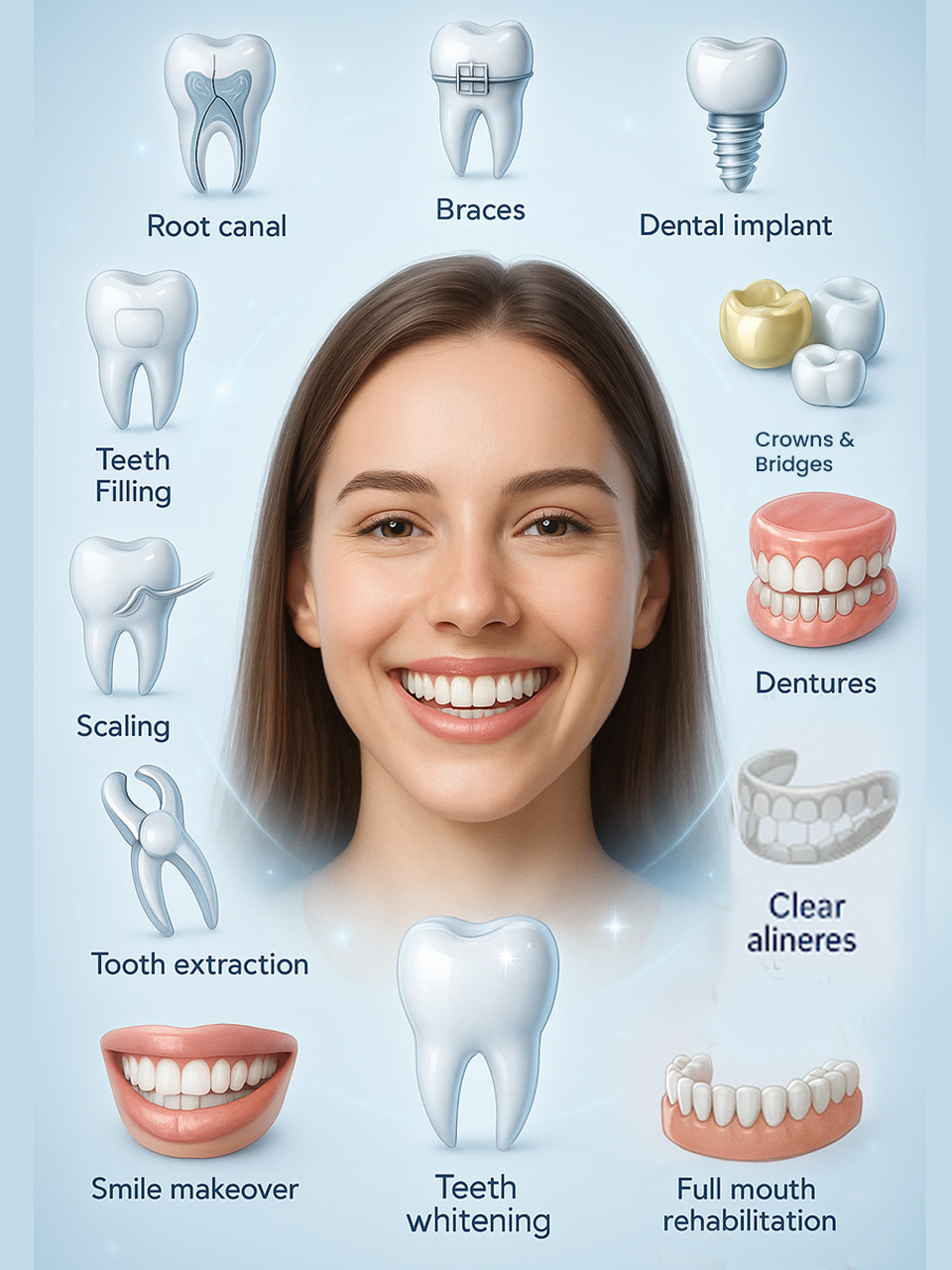
Modern dentistry offers several solutions to replace missing teeth, including dental implants, dental bridges, and removable dentures. These treatments are designed to restore both function and appearance.
If you have lost a tooth, consulting a dental professional early can help you choose the most suitable option and protect your long-term oral health.
📝 Latest Comments
No comments yet. Be the first to comment!
Aligners
📝 Latest Comments
No comments yet. Be the first to comment!